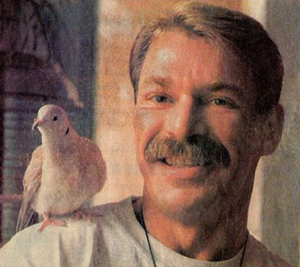
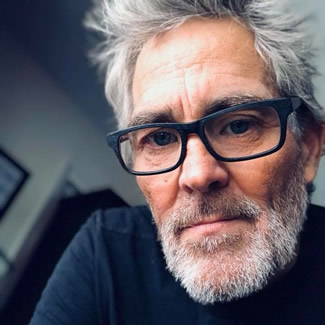
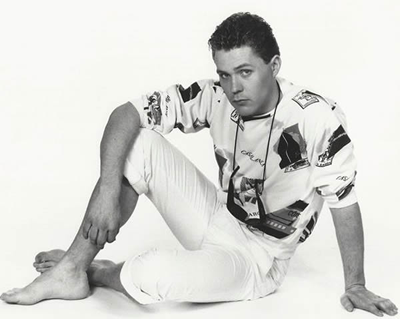
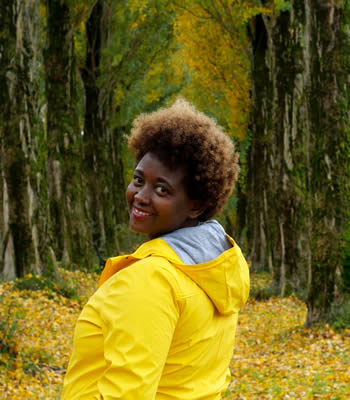
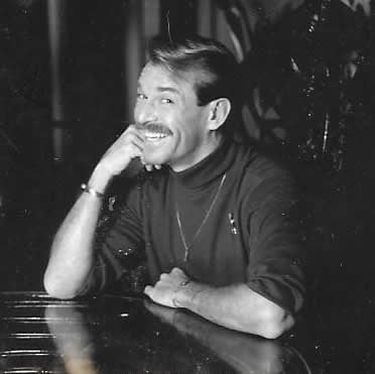
Photo: Bradford McIntyre, with his pet turtle dove.
Photo Credit: Rod MacIvor, Ottawa Citizen
The Ottawa Citizen
Thursday, October 20, 1994
by Elaine Medline
Health Writer
Brad McIntyre learned he was HIV positive 10 years ago. After fearing death for four years, he decided to get on with his life. For McIntyre, the AIDS virus is...
No longer a death sentence
Brad McIntyre held a party for his friends last November and presented each with an award, a gift of crystal. One friend was honored with Most Instrumental. Another was named Best Support.
McIntyre, 42, has lived with HIV for almost a decade, and to him its not a death sentence any more.
The first four years were a living hell, he remembers, mainly because he was afraid of death. But then, after a friend told him he had suffered long enough and hard enough, he slapped some bright paint on his beige apartment walls. He chose to get on with his life.
Fear is something we create, and he has uncreated it, says McIntyre as soothing New Age music plays in the background and his turtle dove Carmen flits along the top of the couch. Facing a life-threatening illness makes you appreciate life, he says.
McIntyre was diagnosed with the virus linked to AIDS and on Nov. 28th, 1985, given six months to live and told by his doctor to arrange his finances and funeral. On the anniversary of his diagnosis every year, he now organizes a party, a celebration of life.
'HIV diagnosis gives man wake-up call' by Susan Riley
The Ottawa Citizen
Wednesday, November 30, 1994
Photo: Bradford McIntyre, with his pet turtle dove.
Photo Credit: Rod MacIvor, Ottawa Citizen
If you were given six months to live, how would you spend the time?
For Brad McIntyre, a 42 years-old former hairstylist at Rinaldo's, its not an idle question. Ten years ago this week, McIntyre was told he was HIV positive and had six months to live.
He was advised to tell his family and arrange his funeral. When he didn't die within the allotted time, he was given 18 more months. On Monday, he celebrated another anniversary of that grim diagnosis with 60 friends at a party at the World Exchange Plaza.
Handsome, healthy, and charged with nervous excitement, McIntyre used the occasion to share the emotion and spiritual transformation that has, he says, made him more fully alive than ever.
We don't usually look at AIDS — or any life threatening illness — as an opportunity. But without diminishing the seriousness of the disease of sentimentalizing its impact, it can be, says McIntyre, "a wake-up call."
Doreen Millman's Speech at the 11th International AIDS Conference by Doreen Millman
11th International AIDS Conference
July 7, 1996, Vancouver, BC, Canada
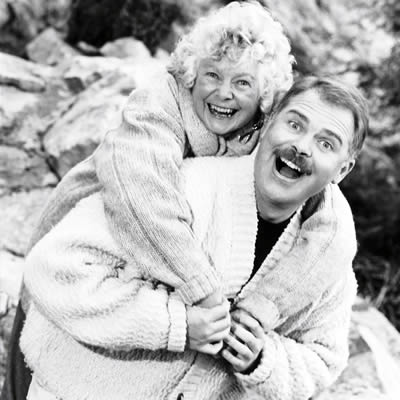
Photo: Doreen Millman with son Paul Millman
Photo Credit and Copyright: Michelle Valberg - www.valbergimaging.com
I'm one of the millions of people around the world living with HIV. I know many of you are probably asking yourselves how I got infected-you're wondering how a 63 year old grandmother could have been exposed to HIV. Well the answer is simple… IT JUST DOESN'T MATTER!
It doesn't matter how anyone became infected. I want to explain that all people living with HIV/AIDS have the same rights, we all do; we deserve and demand to be treated as equals with dignity; we are all people worthy of respect and compassion. The only thing that makes us different from anyone else is that we are living with a virus that is challenging the world in so many ways.
Like millions of people, I know and experience the challenge of living with HIV. But also like millions of people, I know the heartache it is to have a loved one with HIV. You see my son is also HIV positive. In fact, we learned within three weeks of each other that we were both positive. Since that time, our struggles have been the same; our needs and hopes for the future identical.
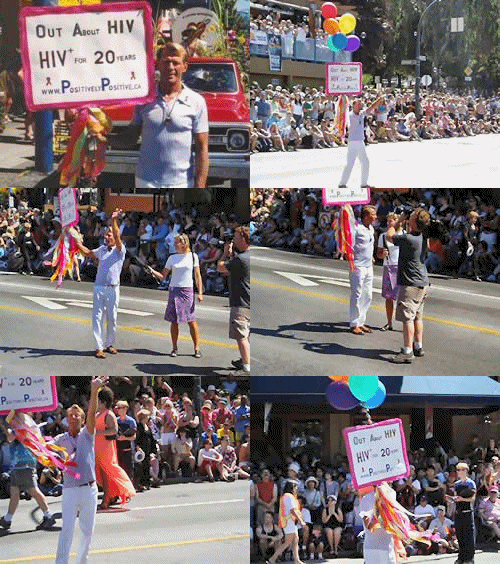
'OUT ABOUT HIV' Canadian Bradford McIntyre, HIV+ since 1984, speaks out about HIV by Bradford McIntyre Artists for Life
September 12, 2010, Vancouver, Canada.
'OUT ABOUT HIV', My name is Bradford McIntyre and I'm Positively Positive! I have been living, infected with HIV (human immunodeficiency virus) since 1984!
I feel very fortunate to be sharing with you!
There is more power in people knowing I am HIV positive, than there ever was in the fear and hiding. The answers are in letting go of fear! Society has created a huge closet housing many shelves. Shelves for Gay, Bisexual, Lesbian and Transgendered, but even more shelves housing drug abuse, alcohol abuse, sexual abuse, physical and mental abuse, bulimia, anorexia, cancer, AIDS (acquired immunodeficiency syndrome), dis-ease and disease. It is time for us to come out of the closet and tell people what is going on in our life. Then and only then can people know what is going on, support you, and if need be, offer help. We don’t have to go through life alone. There are people who will show up if we let them know who we are and what is going on in our life. Instead of deciding what others can handle or know, it is time to come out of the closet. Then and only then can we be our true selves!
Setting an example and... Living Positively With HIV by Christof Maletzky
September 3, 1999 - The Namibian
MATTHIAS Isando Nunuheb was all fired up for the conference on people living positively with the Human Immunodeficiency Virus. Long before the landmark conference was finalised, the 23 year-old from Katutura had prepared his speech on the goals of the gathering — a speech that would have gone down in his short history as one of his greatest hours.
But sadly this was not to be. Two days before he was to announce publicly that he was HIV positive and call on many other infected people to live positively with the virus that cuts across all sectors of Namibia's society, he died.
His brother Menassius had to read the speech at the opening of the conference which is being attended by more than 300 people-many of them HIV positive.
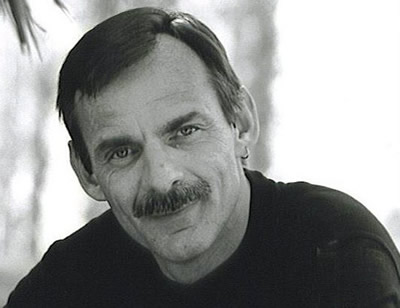
Photo: David Ross Patient: AIDS Activist & Educator
For many people reading this, trying to find any gift in the AIDS experience may seem difficult, if not impossible. However, in the seventeen years that I have been part of the HIV reality I have obtained many gifts from this epidemic. I would like to share these gifts with you in the hopes that it will mobilize you into action, or sustain your efforts. Life gives us gifts in strange packages. At first we are often only aware of what we are losing. It is only over time that we can see what we have gained.
Here are the gifts that I have received from AIDS:
Reflections from an HIV Advocate's Journey: Michael Zee Zalnasky
AUGUST 23, 2018
Photo: Michael Zee Zalnasky,
Founder, The AIDS HIV Survivor Living Memorial
Only diagnosed with AIDS in August 2014, I quickly learned about the ramifications of revealing one's status. The first person who I revealed my status to was my Supervisor, and it cost me my job... my livelihood... along with my pride and integrity. Little did I know it would create a fight in me to stand up to any challenge, so I made a conscious decision to simply tell all. In doing so, I re-gained my self-confidence, my self-pride, and sharing my story released a courage that I didn't know existed inside of me.
I quickly realized it was a life-changing decision that I could live with because it left me with nothing-absolutely nothing-to hide. Being public about my status wasn't enough. I wanted others to feel the freedom associated with open disclosure and the benefits of being open about living with HIV/AIDS, such as less stress. Ironically, support came from every direction; even from people who I didn’t expect to give it.
THE KEEPER OF THE Z00
NOTES ON A JOURNEY by Cecil Wallace
Edited by Bradford McIntyre
Photo: Cecil Cowan Wallace
My partner and I had been looking forward to our second Christmas together. We were happy! What could go wrong, when everything in our life was going so well? Around November, I got sick. We could not understand why I was so sick all of a sudden.
We were living in our apartment on Woolwich Street and it was nice to have our own spot. We were both working at the Baker Street Bistro. We were in the process of buying the restaurant, as that was both our life goals. David Roughfy, my dear friend was going to give us a loan to start our very own restaurant. This was what I wanted and worked for thirteen years to gain. Our life was complete and happy.
In May 2014 I finally told my secret; I published a note called "The Hidden truth" on facebook to inform everyone about my HIV. I had been thinking about coming out of the closet for many years and that day I was ready to share my reality and prepared to face a storm of reactions.
Before coming out I told a few friends, neighbours and parents of my kid's friends. Why did I do that? I was creating my small safe haven, in case the world would turn its back on me. So I was assured that these people would hold my hand and support me!
Back then I was not sure what reaction I would be getting, but in the end I received a lot of supportive responses. Some people called me, others wrote messages calling me a strong and courageous woman, thanking me for sharing, telling me they love me, and reassuring me I would still be the great dancer and remain who I was.