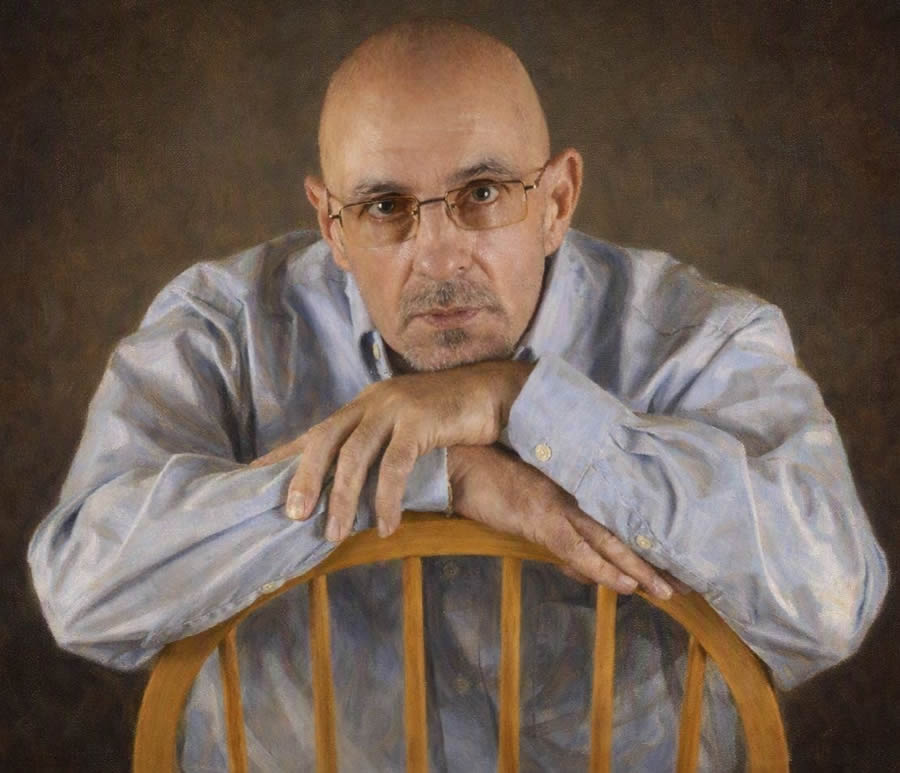
Photo: Eric Novak - ericnovakauthor.com
Nobody Told Us We Would Grow Old
Still Here at Seventy — Aging with HIV
By Eric Novak
Sep 02, 2026
When I was diagnosed in 1984, nobody talked about growing old with HIV. The conversation was about survival — immediate, urgent, and often measured in months rather than years. Medical advice was less about long-term planning and more about settling affairs.
I am now seventy years old. I have lived with HIV for more than four decades.
What that means medically, psychologically, and practically is something nobody fully prepared me for — because nobody expected any of us to get here.
Accelerated Aging and Comorbidities:
The research confirms what many of us already know from living it — long-term HIV survivors age faster than our non-HIV peers. The chronic inflammation that HIV creates in the body doesn’t disappear with effective treatment. It accumulates.
I don’t need a study to tell me this. I had open heart surgery at sixty-three. I’ve had cancer twice. I have developed diabetes and chronic kidney disease. My body has been managed, medicated, and monitored for four decades. The cumulative effect of all of that is its own kind of aging — different from what my non-HIV peers experience and arriving earlier than most of them expect their own health challenges to arrive.
We were the first generation to survive long enough to find this out.
Polypharmacy and Long-Term Toxicity:
I remember the early medication regimens — handfuls of pills taken on strict schedules, with specific food requirements, causing side effects that were sometimes as debilitating as the virus itself. The toxicity from those early medications left marks that don’t disappear when you switch to better drugs.
Today I take one pill a day for HIV. The contrast is almost incomprehensible. But I also take medications for blood pressure, anticoagulation, and other conditions — some directly related to HIV, some to aging, some to the cumulative effect of decades of treatment. Managing all of them simultaneously is its own full-time job.
AIDS Survivor Syndrome:
There is a term that has emerged in recent years — AIDS Survivor Syndrome. It describes something many of us have been living with for decades without having a name for it.
I watched an entire generation disappear. Partners, friends, men I knew and loved — gone within months of diagnosis in those early years. I lost my first partner in 1987. I have lost count of how many others followed.
What that kind of loss does to a person over time is complicated and not fully understood even now. It is not simple grief — it is grief layered over grief, compounded by the guilt of still being here when so many others are not. Why me and not them is a question that has no satisfying answer. You learn to carry it rather than resolve it.
Therapy helps. Community helps. But AIDS Survivor Syndrome doesn’t fully resolve. It becomes part of who you are.
Isolation and “Double Stigma”
There is a particular loneliness that comes with being a long-term HIV survivor in 2026.
The peers who would have understood this experience most intimately — the ones who lived through the same years, lost the same people, navigated the same impossible early decisions — many of them are gone. The support networks that sustained us through the crisis years have changed or disappeared entirely. The community that once gathered around shared urgency has dispersed.
And then there is the stigma — which has not disappeared, only shifted. HIV stigma in 2026 looks different from HIV stigma in 1987 but it persists. Add ageism to that and aging long-term survivors navigate a double burden that younger HIV positive people and non-HIV peers alike rarely fully understand.
I managed who knew about my status for forty-two years. That kind of careful management is itself a form of isolation — carrying something significant largely alone.
Financial and Systemic Uncertainty:
I did not plan for old age. Nobody told me to — and honestly nobody expected me to need to.
When you are diagnosed with a terminal illness in your twenties you don’t open a retirement account. You don’t think about long-term care facilities or Social Security at sixty-seven. You think about next month. Next year if you’re lucky.
The medications that saved my life also complicated my financial future. Years of disability, interrupted careers, and the practical reality of managing serious illness while trying to remain employed left many of us in our elder years on fixed incomes we never anticipated needing to stretch this far.
I am on a fixed income now. Publishing this memoir, building this Substack, navigating independent publishing on a modest budget — all of it happens within real financial constraints that are themselves a legacy of forty years of survival.
The eldercare system was not built with us in mind. Finding knowledgeable, non-judgmental care as an aging HIV survivor remains a genuine challenge that the healthcare system has been slow to address.
Historic Legacy as Advocates:
Long-term survivors are not just patients. We are the living institutional memory of one of the most significant public health crises in modern history.
I have served on the AIDS Clinical Trials Group Consumer Advisory Board for years — sitting in rooms where research decisions are made, representing the perspective of people actually living with the virus. That work didn’t begin with me. It was built by activists who fought — sometimes literally — for a seat at the table when the medical establishment and the government wanted us invisible.
“Nothing about us without us” wasn’t a slogan. It was a survival strategy.
The rapid development of the COVID-19 vaccine drew directly on frameworks established by HIV advocacy decades earlier. The infrastructure, the trial design, the consumer involvement — all of it had roots in what HIV activists built when no one else would.
We did that. The people who are gone did that. And it is still saving lives
Redefining Survival:
For most of my adult life survival was the goal. Get through the next crisis. Manage the next diagnosis. Make it to the next lab result. The future was something I approached cautiously — in short increments, never too far ahead.
Something has shifted.
I am seventy years old. I have lived with HIV for more than four decades. I have survived AIDS, cancer twice, open heart surgery, and everything in between. And somewhere in the writing of this memoir — in the process of looking back across all of it — I began to see a future that has me in it.
Not just surviving. Thriving.
That shift — from emergency management to quality of life, from endurance to meaning — is perhaps the most unexpected gift of long-term survival. We were not supposed to get here. And now that we are here the question is no longer whether we will survive but how we will live.
That is a question worth spending the rest of our lives answering.
The full story of four decades living with HIV — the survival, the loss, the resilience, and the unexpected gift of still being here — is told in my memoir, A Life Never Promised: A Long-Term Survivor’s Memoir of HIV and Resilience, available at ericnovakauthor.com.
Eric Novak is a long-term survivor of HIV who has lived with the virus since 1984. A resident of Columbus, Ohio, he spent decades navigating the epidemic’s most devastating years before becoming an active voice in HIV advocacy and community advisory work. His involvement in clinical trial oversight and HIV care policy brought the perspective of long-term survivors into rooms where research and treatment decisions are made. His survival has also encompassed cancer — twice — and open-heart surgery, making his story one of endurance across nearly every dimension of serious illness. A Life Never Promised is his first book. Visit: https://ericnovakauthor.com/
Contact:
Eric Novak
tenovakpublishing@gmail.com
Source: Eric’s Substack
https://tenovakpublishing.substack.com/p/nobody-told-us-we-would-grow-old
“Reproduced with permission - Eric Novak”
Eric Novak
Back to…
Positively Positive - Living with HIV/AIDS:
HIV/AIDS News
For more HIV and AIDS News visit…
Positively Positive - Living with HIV/AIDS: HIV/AIDS News Archive
|