March 13, 2026
Orphaned by War at age 11, a Global-Health Researcher Builds a Support System for Ugandan Youth Affected by HIV/AIDS
Fred Ssewamala returns to the community of his birth to nurture hope for poor orphans and their extended families
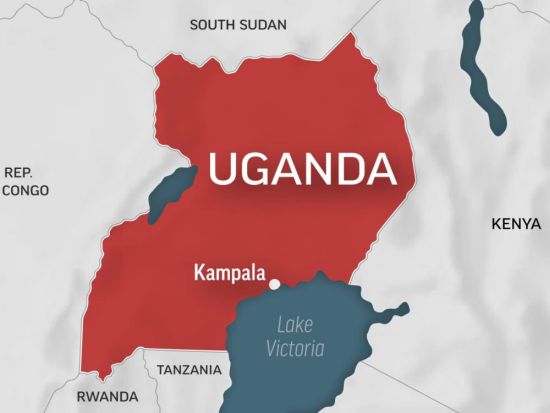
Known affectionately as “Dr. Fred” around the halls of New York University’s Silver School of Social Work where he teaches, Fred Ssewamala leads a researcher’s life rooted in purpose. Eight or nine times a year, he makes the 24-hour journey to the tiny Ugandan village where he was born—a rural community 19 miles north of the capital of Kampala—to confront a crisis he knows intimately.
As the founder of the International Center for Child Health and Development (ICHAD), Ssewamala has spent 20 years developing and deploying a triad of support that integrates mental health, medication adherence, and economic empowerment. The interventions are designed with one overarching goal: to improve the odds for youth who live with HIV and have lost one or both of their biological parents to the disease.
Ssewamala’s motivation for this work stems from his own youth: He was raised as an orphan after losing his family—not to AIDS, but to Uganda’s civil war in the 1980s. Brought up by a retinue of relatives and “uncles and aunties"—neighbors who stepped in where bloodlines ended—he credits that generosity with paving his way out of poverty and toward a successful academic career.
“I grew up an orphan; I grew up poor,” Ssewamala said. “When you are an orphan in Uganda, you are taken care of by the extended family. From a very early age, I wanted to support those in similar circumstances.”
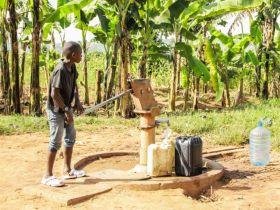
In the greater Masaka region near Lake Victoria—where scientists believe HIV first emerged on the African continent—the semi-urban landscape has rocky roads, bungalows, shops, and commercial agriculture. Here, the struggle is often invisible. There are 80,000 Ugandan children under 15 living with HIV, but many keep their status a secret to avoid the stigma that often goes with it.
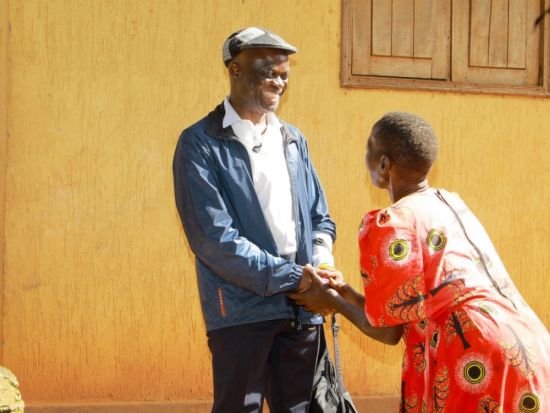
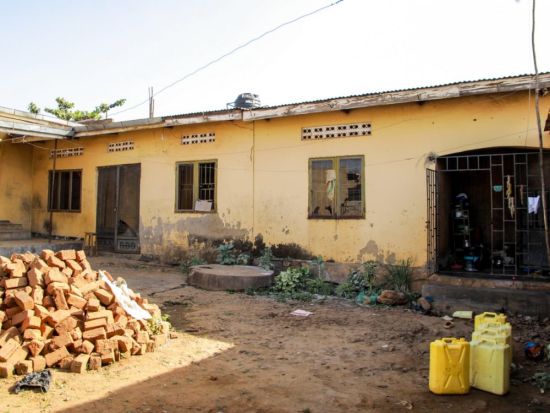
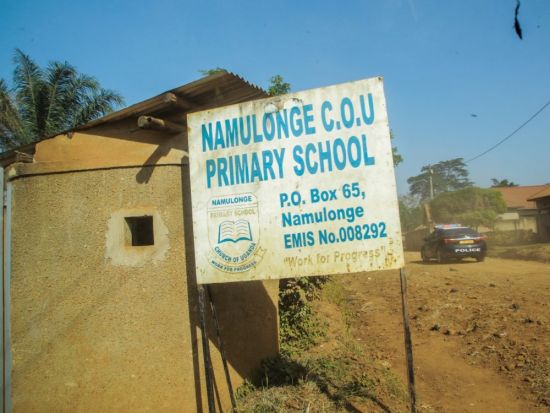
During a research trip in December, Ssewamala walked through his now-dilapidated childhood home in Namulonge and visited his former primary school. Making his rounds, he met with counselors, field research assistants, data analysts, and young people who work for his child-health institute.
Within Ugandan extended families, children without biological parents represent an extra burden, particularly since the country lacks a public safety net. Many of those orphaned children who lack help end up on the streets or risk an early death.
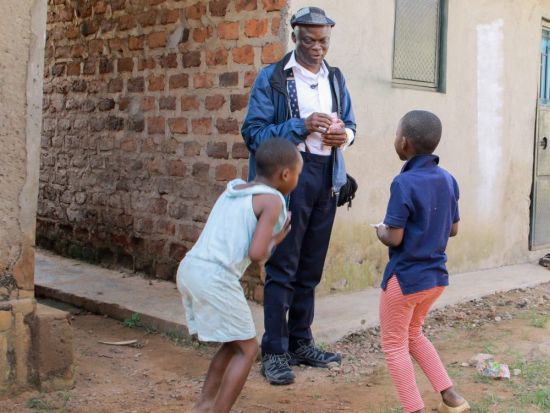
It saddened but did not shock Ssewamala to encounter a boy leaning against a tree. The child was visibly symptomatic. “I missed school yesterday to get my medication,” the child admitted, “but I can’t take it now because I’ll throw up.” Adults in the village had already alerted Ssewamala that children were skipping pills in order to avoid nausea. The antiretroviral therapy (ART) pills must be taken with food, which some orphans cannot afford.
Ssewamala’s multi-pronged response to orphans born with HIV/AIDS in Uganda and other impoverished rural regions of sub-Saharan Africa is rooted in his PhD work on microfinance and asset-building. He has found that medical care and mental health counseling are not enough; families also need financial literacy and economic aid to sustain health.
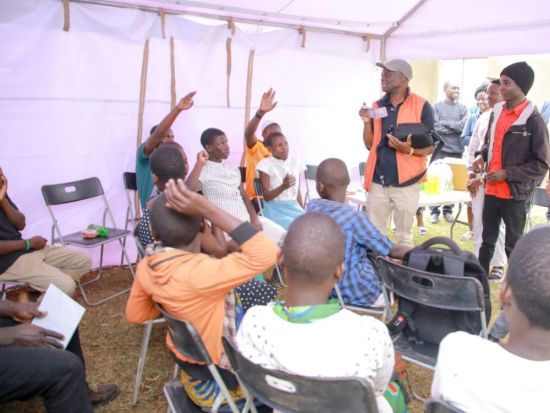
At Ssewamala’s research center, families raising HIV/AIDS orphans are introduced to income-generating opportunities and grants based on their savings. As a result, orphaned children are far more likely to stay in school, and those living with HIV receive support for medication compliance.
“As the old African proverb goes, ‘It takes a village to raise a child.’ I have found that really to be the case,” said Ssewamala.
ICHAD’s main field offices are located in the towns of Masaka and Kalisizo, but it works in dozens of Ugandan communities. Founded by Ssewamala in 2013, the center employs nearly 100 people in health research, counseling, and education. The staff includes former study participants, some of whom now help implement "Ssuubi" projects (named after the Luganda word for “hope”). The Suubi interventions combine mental health support, guidance and education on consistent medication use, and means for economic self-sufficiency.
Ssewamala calculates that the Suubi series alone has helped 10,000 Ugandan families open bank accounts with matched savings. Simultaneously, an evidence-based manual titled Amaka Amasanyufu (“Happy Families”) is being used in 200 Ugandan and 90 Kenyan schools as well as by churches. The guide facilitates 16 group sessions supporting the mental health of 8- to 13-year-old children who exhibit disruptive behavior disorders.
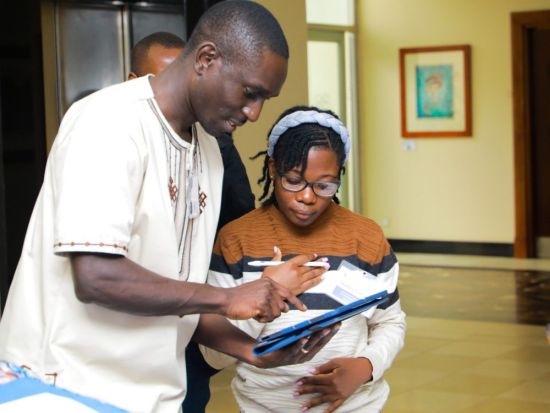
Study trials extend for four or five years to ensure measurable outcomes designed to endure for the foreseeable future. Bridges to the Future, which provides a 2:1 match for every dollar that a family saves while helping them set up household-level microbusinesses like poultry farming, has shown marked improvements in school performance and food security across 48 primary schools. Meanwhile, Suubi4Her is operating in 47 secondary schools, focusing on 1,200 teenage girls. This work has already influenced the DREAMS Partnership in the design of its interventions to assist children who live with food insecurity and HIV/AIDS in 10 sub-Saharan countries. The international DREAMS consortium is supported by the Gates Foundation, UNAIDS, USAID, and other funders.
Currently developing and overseeing 10 National Institutes of Health (NIH) study-trials and interventions in child-health, Ssewamala estimates that his initiatives over two decades have positively and directly affected tens of thousands of children who’ve lost one or both parents. And for him, each success is deeply personal. He lost his mother at age three, and, at age 11, he hid under a bed while government soldiers murdered his father, stepmother, and siblings. A hail of bullets killed a cousin lying next to him but missed Fred by inches.
He kept his trauma and status as an orphan hidden until his mid-20s.
“Most people hear ‘orphan’ and think you are almost a street beggar,” he says. “I’ve outgrown that common concern. I feel blessed to do the work I do.”
Today, Ssewamala is the Constance and Martin Silver Endowed Professor of. Poverty Studies at New York University’s Silver School of Social Work and the faculty director at the school’s McSilver Institute for Poverty Policy and Research, and he holds a joint appointment with the NYU School of Medicine. In the words of fellow child health expert Mary McKay he is a collaborative pioneer in “interwoven financial and mental health services” who deftly taps “community-level assets” for children living with HIV in and beyond Uganda. McKay worked with Ssewamala and Silver School associate professor Ozge Sensoy Bahar on a 2022 textbook, Child Behavioral Health in Sub-Saharan Africa.
“When I talk to Ugandan orphans, and frankly all orphaned children across the poor sub Saharan African countries where I work, they are dreaming big,” Dr. Fred says. “They want to be professors, doctors, or lawyers. You can see it in their eyes that they have suubi. They need opportunities to realize their hopes and dreams.”
Contact
Robert Polner
(212) 998-2337
robert.polner@nyu.edu
Source: NYU News - New York University
https://www.nyu.edu/about/news-publications/news/2026/february/orphaned-by-war-at-age-11--a-global-health-researcher-builds-a-s.html
"Reproduced with permission - NEW YORK UNIVERSITY"
NEW YORK UNIVERSITY
Back to…
Positively Positive - Living with HIV/AIDS:
HIV/AIDS News
For more HIV and AIDS News visit…
Positively Positive - Living with HIV/AIDS: HIV/AIDS News Archive
|