NOVERMBER 11, 2026
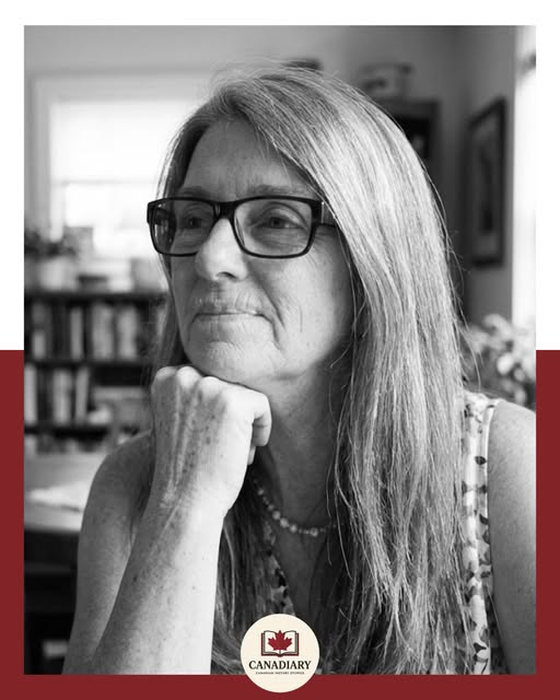
CANADIARY: Janet Conners
In 1989, a lab technician in Halifax was told by doctors that she could not possibly have HIV.
She insisted on the test anyway.
She was positive, and she decided she was not going to die quietly.
She was born Janet Pritchard in Vancouver in 1956, the middle of six children.
Years later she would joke about it. In a family that size, she said, you had to lobby for your survival.
By 1981 she was a single mother with a young son, working as a lab technician at the infectious disease clinic of the Victoria General Hospital in Halifax.
That year she met Randy Conners.
He was a young computer specialist. He was kind. She called him the love of her life.
He was also a hemophiliac.
His blood did not clot properly, and like thousands of Canadians with hemophilia, he depended on blood products to stay alive.
In the 1980s, those blood products were carrying HIV.
Randy tested positive.
Doctors told Janet she was not at risk. She ignored them and was tested in 1989.
Think about what that diagnosis meant in 1989.
There was only a single drug available. People were being told they had months to live. And the stigma was crushing. People with HIV lost jobs, lost friends, and were shunned by their own neighbours.
Most people who received that news hid it.
Janet Conners did the opposite.
She and Randy went public.
She became one of the first women in Canada to speak openly about being HIV positive. They put their faces and their names in front of cameras and told the country exactly how they had been infected.
Not through anything they had done.
Through Canada's own blood system.
They took their case to Nova Scotia's health minister, George Moody.
On April 14, 1993, Moody announced that the province would provide compensation to a couple who had contracted HIV from tainted blood. Nova Scotia became the first province in Canada to compensate victims.
Other provinces were forced to follow.
But the federal offer that existed did not cover people like Janet. She had been infected by her husband, not by a transfusion. In the eyes of the program, she was a secondary case.
And she refused to shut up.
She and Randy kept pushing, provincial capitals and Ottawa alike, for a full public accounting of how so many Canadians had been infected through the blood supply.
She is widely credited with helping push the government to call one.
The Royal Commission of Inquiry on the Blood System in Canada, led by Justice Horace Krever, opened in 1993. The Conners testified before it, describing their diagnoses and what their lives had become.
Randy did not live to see the end.He died in 1994.
Janet kept going without him.
She became president of the Nova Scotia Haemophiliac Society and vice-chair of the AIDS Coalition of Nova Scotia. She sat on the board of the Canadian Treatment Action Council. She fought for access to treatment and clinical trials, and for women with HIV to get information and testing that actually fit their lives.
She did all of it at a time when being openly HIV positive carried a real risk of ostracism and even violence.
Then the answers came.
The Krever Commission delivered its final report in 1997. It examined how thousands of Canadians had been infected with HIV and hepatitis C through blood and blood products in the 1980s.
The report led to compensation for victims across the country.
And it led to the end of the Canadian Red Cross’s role in running the blood supply. A new national agency, Canadian Blood Services, took over the system outside Quebec, built around the safety failures the inquiry had exposed.
Here is the part worth remembering.
Allan Rock, who dealt with her as a federal minister, later said: “Her moral voice was impossible to ignore.”
“We have an excellent blood system in this country today,” he said, “and I think one of the people we have to thank for that is Janet Conners.”
She was awarded the Governor General’s Meritorious Service Medal and the Nova Scotia Human Rights Award. Dalhousie, Acadia and Mount Saint Vincent universities each gave her an honorary doctorate. She liked to call herself "Dr. Conners."
She spent her final years with her grandchildren.
In August 2022, she developed a cough. At the hospital, doctors found an aggressive lung cancer that had gone undiagnosed.
She died that same month. She was 66.
A woman who had been told she had six months to live had lived for 33 more years.
The next time you roll up your sleeve to give blood, or receive it, consider the safeguards built into every bag.
Some of them exist because a lab technician from Halifax refused to take the money and stay silent.
CANADIARY
Canada’s Past, One Page at a Time
Turning the pages of Canada’s past. Forgotten stories, remarkable lives, and moments that shaped a nation.
Source: https://www.facebook.com/profile.php?id=61566248411804
“Reproduced with permission - CANADIARY - CANAIDIAN HISTORY STORIES
CANADIARY - CANAIDIAN HISTORY STORIES
Back to…
Positively Positive - Living with HIV/AIDS:
HIV/AIDS News
For more HIV and AIDS News visit…
Positively Positive - Living with HIV/AIDS: HIV/AIDS News Archive
|