In ‘Elsinore,’ People Lie About AIDS and Everything Else
Mark S. King
Nov 16 2026
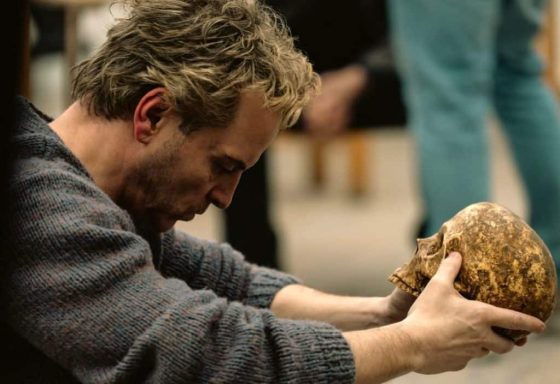
Andrew Scott stars in Elsinore. Photograph: Anthony Dickenson
In a wrenching scene in the new film Elsinore, Ian Charleson (played by Andrew Scott) is forced to make two painful admissions from his hospital bed to his working class parents. The year is 1989, and Ian must admit that he is a gay man and that he has AIDS. That conversation was a common one-two punch between gay men and our families during the darkest years of the plague.
In the film, the parents’ shock is eclipsed only by the anguish of their son, who apologizes for years of deceit and for withholding his life from them. That Ian feels the need to apologize for hiding his queerness and his HIV diagnosis – two things this world does not treat kindly – may be the saddest part of all.
It is that conflict – knowing there are things we have every right to be truthful about, and lying about them anyway – that gives Elsinore its melancholy power. As another character tells Ian about the world they live in as gay men, “They make us into liars, and then they make us ashamed of it.”
In Elsinore, lies of every sort are on display. The lies you tell friends who you secretly resent, the lies of omission, the bald-faced lies told out of hubris, and then, ultimately, the lies all actors must inhabit the moment they walk onstage. Which brings us to the fascinating true story behind Elsinore.
Ian Charleson was a London-based stage actor who had won acclaim after starring in Chariots of Fire, the film that won the 1981 Oscar for Best Picture. Although essentially an out gay man among his friends, Charleson sidestepped discussing his sexuality in hopes of a flashier Hollywood career, which never really materialized.
When Elsinore begins in 1989, Charleson’s prospects have dried up, no one remembers anything about Chariots of Fire except the theme music, and the AIDS crisis is obliterating the gay men in his social circle. Meanwhile, London’s National Theater production of Hamlet is suddenly without a leading man when star Daniel Day-Lewis walks off the stage and does not return. Charleson is approached to take on the role, which is considered the summit of any actor’s career.
There’s only one problem. Charleson is living with AIDS and the chances are good that rehearsing and performing Hamlet could hasten his physical demise. Still, Charleson believes his artistic fulfillment is a greater gift than whether or not he lives an additional few months and, despite the misgivings of his doctor, Charleson charges forward.
To be or not to be, indeed.
The very idea of Hamlet, a walking existential crisis, being portrayed by a man dying of AIDS would feel overly on-the-nose were it not true. The screenplay by Stephen Beresford nimbly traverses the inherent tragedy of AIDS, bringing those years of abject fear and rueful humor back to crackling life.
Andrew Scott’s portrayal of Charleson is a funhouse mirror: an out gay actor giving a performance of a conflicted gay actor giving a performance. More moving still is how Scott is able to reach back a generation and show the heartbreak of actors who were more tightly sealed in their closets. (In real life, Scott came out early in his career and seems perfectly happy with the results.)
Actress Olivia Colman, playing the real life HIV clinical pioneer Margaret Johnson, hasn’t much to do in Elsinore other than act grumpy as Charleson’s physician. The good doctor Johnson is far more interested in protecting Charleson’s immune system than whether her patient achieves the last dream he may ever have.
It is always difficult to present AIDS history in a way that doesn’t reduce us to trauma porn, and Elsinore director Simon Stone keeps a clear and unflinching eye on a community under siege. Thankfully, Elsinore also shows us the sense of fellowship and found joy that we clung to during those years like life rafts.
There’s also an interesting debate between Charleson and an activist friend about his coming out about his diagnosis while his Hamlet performance has the spotlight. While I default to the value of any activism endeavor, I was moved by Charleson’s plea to be seen as an actor trying to connect with his audience without such distractions. But if his disclosure might serve the greater good…? And why lie by omission? What, exactly, is worth the lie? (In real life, Charleson allowed only his acting to speak for him. He agreed to have AIDS listed as his cause of death when the time came.)
Ian Charleson may not have achieved the kind of acting career he had once dreamt for himself. In Elsinore, he is fraught with self doubt, with shame, with a search for truth, and with eternal questions about life and its casual cruelty. He took all of that and channeled it into the performance of a lifetime. He only needed a single line from Hamlet to guide his way.
“To thine own self be true.”
Mark
Contact:
Mark S. King
My Fabulous Disease
Source: My Fabulous Disease
https://marksking.com/my-fabulous-disease/in-elsinore-people-lie-about-aids-and-everything-else/
“Reproduced with permission - My Fabulous Disease”
My Fabulous Disease
Back to…
Positively Positive - Living with HIV/AIDS:
HIV/AIDS News
For more HIV and AIDS News visit…
Positively Positive - Living with HIV/AIDS: HIV/AIDS News Archive
|